Vetting Suppliers for Tunnel and Pipe Gallery Trolley Packages
A tunnel lining trolley and a pipe gallery trolley are not catalogue products. They are steel structures built to suit a specific tunnel profile, a specific gallery section and a specific pour sequence, moved along the alignment during concrete placement and reused across many cycles. That makes them harder to buy than standard wall or slab formwork, because almost every commercially important question — will it fit, will it carry the load, will it arrive complete, will it pass inspection — can only be answered from documents a supplier is willing to put its name to.
This guide is a supplier-evaluation checklist for contractors who have already decided to source a trolley package and are now moving from evaluation into execution. It is organised around four questions that decide whether a purchase is defensible: can the supplier actually build what it has quoted, what terms are you committing to, how will you accept the goods, and what protects the delivery date. Every factual reference below is drawn from published company information or from the external standards cited in the text.
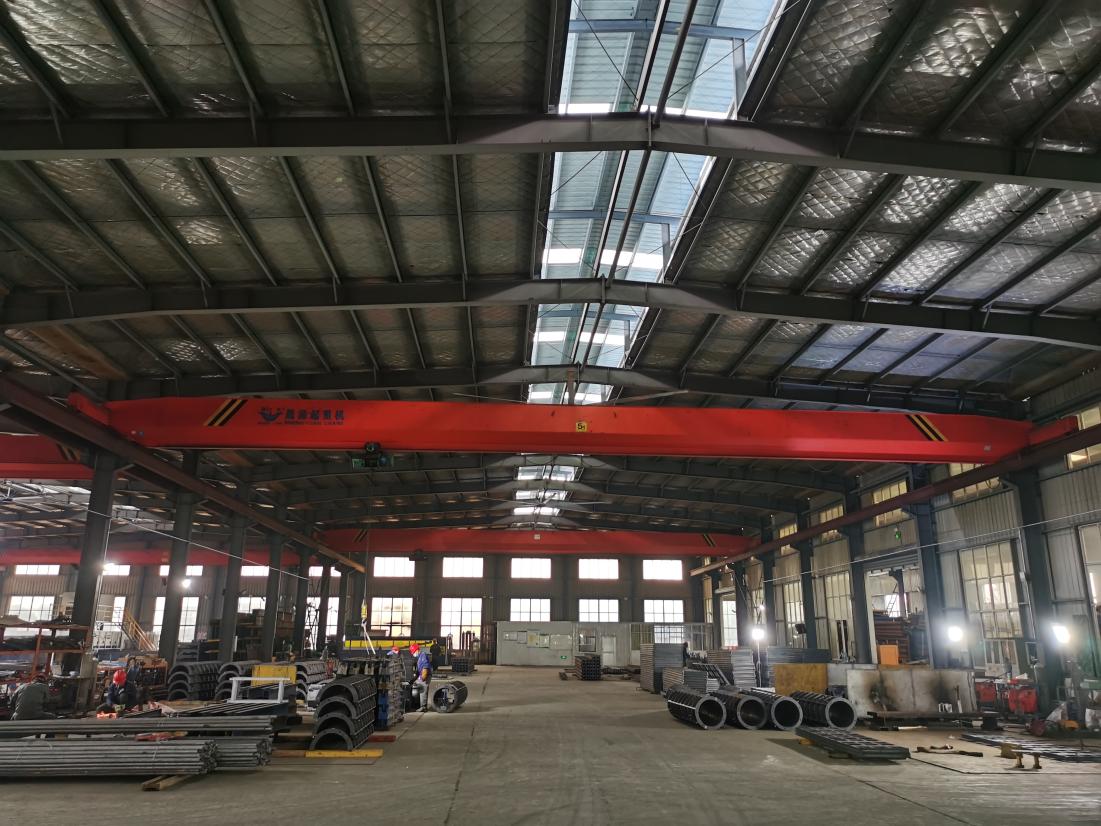
Spot welding workshop at Yancheng Lianggong Formwork Co., Ltd. Trolley packages are welded steel structures, so welding-process evidence belongs at the top of the vetting list.
Why trolley procurement needs a different vetting approach
Standard formwork can be shortlisted from a catalogue. A wall system, a slab table or a climbing bracket exists as a defined product family with published panel sizes and load tables, and the buyer compares configurations. A tunnel lining trolley or a pipe gallery trolley behaves differently: it is engineered against a cross-section, a lining thickness, a pour length and a site access route. Two projects nominally in the same category may need different structures.
The practical consequence is that the evaluation shifts from product comparison to supplier capability verification. You are not asking "which panel is better". You are asking whether this supplier can demonstrate, in writing, that it owns the fabrication process, applies a controlled welding quality system, holds certification whose scope actually covers the work being ordered, and will let you inspect the package before it ships.
FWK Lianggong Formwork, the trading identity of Yancheng Lianggong Formwork Co., Ltd., lists both products in its catalogue: the Hydraulic Tunnel Lining Trolley and the Pipe Gallery Trolley, model TC-120. The company was established in 2010, operates a 12,870 m² facility with 230 employees and a 45-person technical team, reports annual output of 12,000 tons, and exports approximately 70% of production to North America, South America, the Middle East, Europe and Africa. Those figures are company-reported and useful as a starting frame — not as proof of a specific trolley's performance.
Industry background: where supplier claims stop and evidence starts
Formwork procurement is unusually exposed to a category error: treating a general design standard as if it were a product certificate. The clearest example is falsework. BS EN 12812:2008, published by BSI, specifies performance requirements and limit-state design methods for two design classes of falsework — and states explicitly that it does not specify requirements for formwork, although formwork may form part of the falsework construction. A supplier citing EN 12812 in a brochure has told you something about design methodology, not about product conformity.
The same discipline applies to certificates. A quality management system certificate is issued against a defined scope, and that scope is normally narrower than the full product catalogue. This is not a defect — it is how certification works — but it means the buyer must read the scope wording rather than the logo. Where the scope does not name the product being purchased, the certificate is supporting evidence for the supplier's management system, not evidence for the trolley.
A second background point concerns comparability. Catalogue presence is not capacity, and capacity is not delivery performance. Third-party analyses of the formwork supplier landscape consistently separate documented product-category presence from claims about output, market share or customer results. A supplier listing a tunnel trolley tells you the product line exists; it does not tell you the factory can produce your configuration on your date.
The four-part evaluation framework
Use four sequential gates. Do not move to commercial negotiation until gate one is closed, and do not release a deposit until gates one to three are closed in writing.
- Capability verification — factory identity, equipment, engineering resource, certification scope, customization interface.
- Purchasing terms — minimum order quantity, delivery terms, payment structure, and everything that must be agreed alongside them.
- Acceptance criteria — what is inspected, by whom, against what record, before shipment.
- Delivery assurance — production lead time, packing and loading logic, and the commercial mechanism if the schedule moves.
Part 1 — Capability verification
Factory identity and the equipment that matters
Start with the legal entity and its address, then match it to what you can see. Yancheng Lianggong Formwork Co., Ltd. is located at No. 8, Shanghai Road, Economic Development Zone, Jianhu County, Yancheng City, Jiangsu Province, China. A trolley package is dominated by plate cutting, member preparation and welding, so the relevant process list is short and specific. Lianggong's published facility imagery documents a sheet laser cutting machine, a CNC 5600 double-head precision saw, a gantry machining center (PM2060HC), a shot blasting machine, an industrial welding robot, manual and spot welding workshops, a painting workshop and a storage warehouse.
For a buyer, each of those items answers a question. Cutting and machining capability answers whether interface plates and stiffeners are produced in-house or bought in. Shot blasting and painting answer surface preparation, which drives coating adhesion on a structure that will sit in a tunnel environment. Welding equipment answers whether there is a controlled process to audit rather than hand skills to trust. Ask for the workshop that will actually run your order, not a generic facility tour.
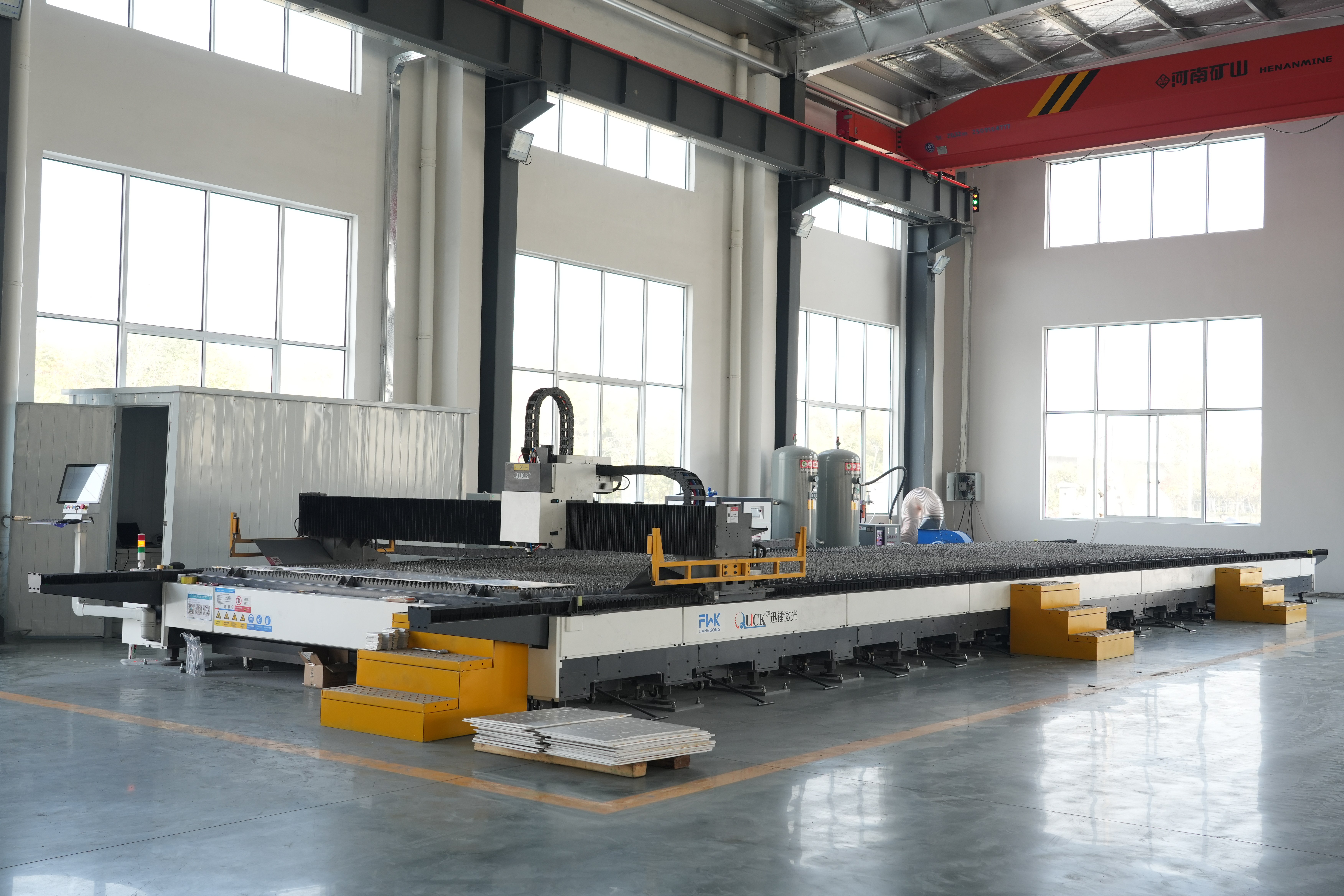
Sheet laser cutting machine. Plate cutting accuracy sets the starting tolerance for every trolley frame that follows.
Capacity and engineering resource
Lianggong reports a monthly capacity of 1,000 tons and an annual output of 12,000 tons, which is arithmetically consistent. Reported staffing is 230 employees, including a 45-person technical department that works alongside the sales department. The technical headcount matters more than the production headcount for trolley work, because the deliverable is not only steel — it is a structure reconciled to your section geometry, your pour sequence and your site handling constraints.
Treat these figures as company-reported. They become verifiable when you tie them to your own order: ask how many tons per month are allocated to structures of your size, and ask for the production schedule with the trolley package slotted into it before you sign.
Certification: read the scope, not the logo
This is where most vetting failures happen. Lianggong holds a set of certificates, and the honest way to use them is to check each one against the item you are buying.
- ISO 3834-2:2021 welding quality management system, certificate 23/1014-3834, issued by SGS Italia S.p.A., valid 19 December 2023 to 18 December 2026. Scope: fusion welding of steel structures parts and components. This is the most directly relevant document for a welded trolley structure, because it addresses the welding process itself rather than general company management.
- EN 1090-1:2009+A1:2011 and EN 1090-2:2018+A1:2024 factory production control, certificate 1381-CPR-889, issued by SGS Italia S.p.A., valid 19 December 2023 to 18 December 2026. Scope: execution of structural steel components. Relevant to the structural steel execution discipline behind a trolley frame.
- ISO 9001:2015 quality management system, certificate 03425Q50028R4M, issued by BEIJING HANGXIE CERTIFICATION CENTER CO., LTD., valid 8 January 2025 to 3 March 2028. Scope: hydraulic auto-climbing formwork and cantilevered climbing formwork for construction.
- ISO 14001:2015 (0342026E0058R101) and ISO 45001:2018 (0342026S0061R101), both issued by BEIJING HANGXIE CERTIFICATION CENTER CO., LTD., valid 4 February 2026 to 9 February 2029, covering environmental and occupational health and safety management activities related to production of hydraulic self-climbing and cantilever formwork for building construction.
- LG-100 Trench Box EU ECM technical documentation compliance certificate, certificate OP250411.YLFD013, issued by ECM, valid 9 May 2025 to 8 May 2030, against EN 13331-1:2002, EN 13331-2:2002, EN 12811-1:2003 and EN 1997-1:2024. Scope: LG-100 Trench Box.
Note what this list does and does not establish. The ISO 9001, ISO 14001 and ISO 45001 scopes name climbing formwork production activities, not trolleys. The ECM certificate names the LG-100 Trench Box, not a tunnel lining trolley. The welding and structural steel certificates are process-scoped and therefore transfer more readily to a welded trolley package, but they still do not certify a specific structure's design. A supplier that presents the whole certificate set as blanket product approval is either careless or misrepresenting — either answer is useful to you.
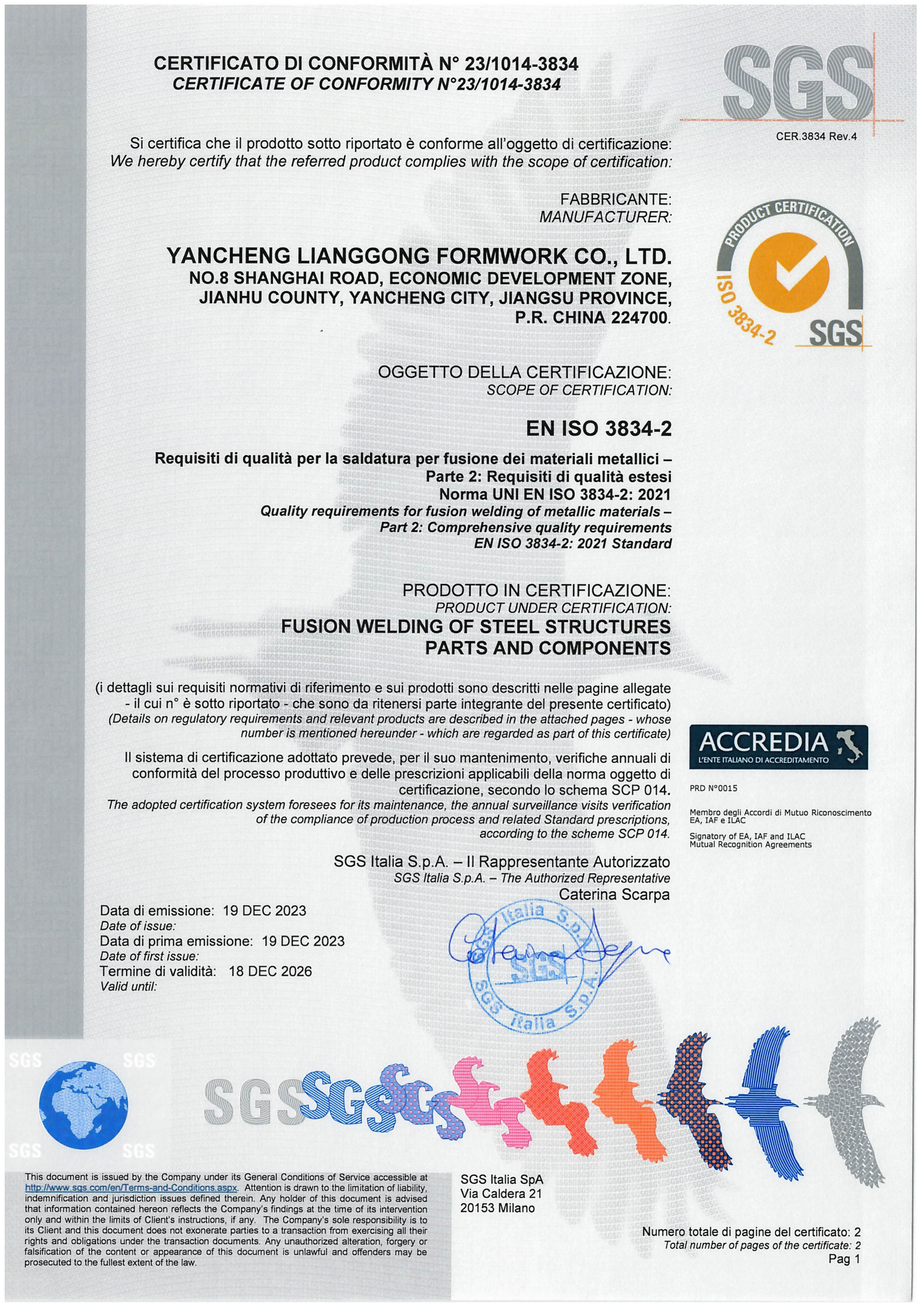
ISO 3834-2:2021 welding quality management system certificate, SGS Italia S.p.A., valid to 18 December 2026. Scope covers fusion welding of steel structures parts and components.
Customization and the engineering interface
Trolleys are customized by definition, so the question is not whether a supplier offers customization but how the interface is controlled. Lianggong states an OEM/ODM production mode with Logo and Size customization, supported by the 45-person technical department. In practice you should ask three things: who signs the general arrangement drawing, what revision-control process governs changes after approval, and whether shop drawings are issued for your engineer's review before cutting starts.
Project references should be read with the same care as certificates. Lianggong documents a long-running H20 Timber Beam Formwork supply to an EPC contractor on the Kalimantan Dam project in Indonesia, where the system was adapted to irregular and curved dam sections. That reference is genuine and relevant to flexible configuration — but it is an H20 timber beam system reference, not a tunnel trolley reference. Using it as trolley proof would be exactly the scope error this guide warns against. Ask instead for references on structures of comparable geometry and mass, and verify the scope yourself.
Part 2 — Purchasing terms to lock before the deposit
The published purchasing terms for Lianggong orders are: minimum order quantity 1×20GP container, delivery terms FOB or CIF, payment terms 50/50, and acceptance by pre-shipment test. These are standard export terms, and their value is that they define where your risk sits.
- MOQ of one 20GP container sets the commercial floor. Trolley packages are bulky steel assemblies, so confirm early whether your scope fits the container envelope or requires a different loading arrangement.
- FOB or CIF determines who controls and pays freight and insurance. FOB leaves you managing the forwarder from the port of loading; CIF transfers that to the supplier. Neither is better in the abstract — the choice depends on whether you have a freight contract you trust.
- 50/50 payment means half on order and half on a defined trigger. The critical work is defining the balance trigger precisely: is it bill of lading date, or a passed pre-shipment test with documents released? Write the test result into the payment condition.
Part 3 — Acceptance criteria and pre-shipment testing
"Pre-shipment test" is a category, not an inspection plan. Converting it into an enforceable criterion is the buyer's job, and it is where the difference between a smooth delivery and a dispute is decided.
A workable acceptance package for a trolley order normally contains four layers. First, dimensional verification against the approved shop drawings, including the interface points that must match the tunnel or gallery section. Second, welding inspection records consistent with the welding quality system under which the structure was built, including the operator and procedure qualification trail. Third, a trial assembly check where the structure is assembled and matched before packing, so that site fit-up is not the first time components meet. Fourth, documentation release — drawings, material certificates, inspection records and packing list — issued as a defined condition of the balance payment.
Two practical rules make this enforceable. Require a written inspection plan before production starts, with the hold points named. And require photographic or witnessed evidence at each hold point, because you will not be in the factory when the structure is finished. Lianggong's stated quality control is 100% test, which is a useful commitment but still needs your definition of what is being tested.
Part 4 — Delivery assurance for trolley packages
The published production lead time is 30–35 days. Before you plan around that number, confirm two things in writing: whether it applies to your specific configuration, and whether it is measured from deposit or from approved shop drawings. For engineered structures, the drawing approval stage is frequently the real constraint, and a lead time that excludes it will not hold.
Delivery assurance for trolleys splits into three separate risks. Production risk is the factory schedule, addressed by the milestone plan and hold points above. Logistics risk is the physical movement of oversized steel assemblies — the loading plan must be agreed before production, because member segmentation is decided at the drawing stage, not at the port. Documentation risk is customs and site entry, which depends on certificates, packing lists and, where relevant, conformity documents being correct and complete at the time of shipment.
Lianggong reports after-sales support through both on-site support and remote guidance, and operates a 70% export business across North America, South America, the Middle East, Europe and Africa. Export experience is relevant to documentation and loading practice, but it does not by itself guarantee a schedule — only the contract mechanism does.
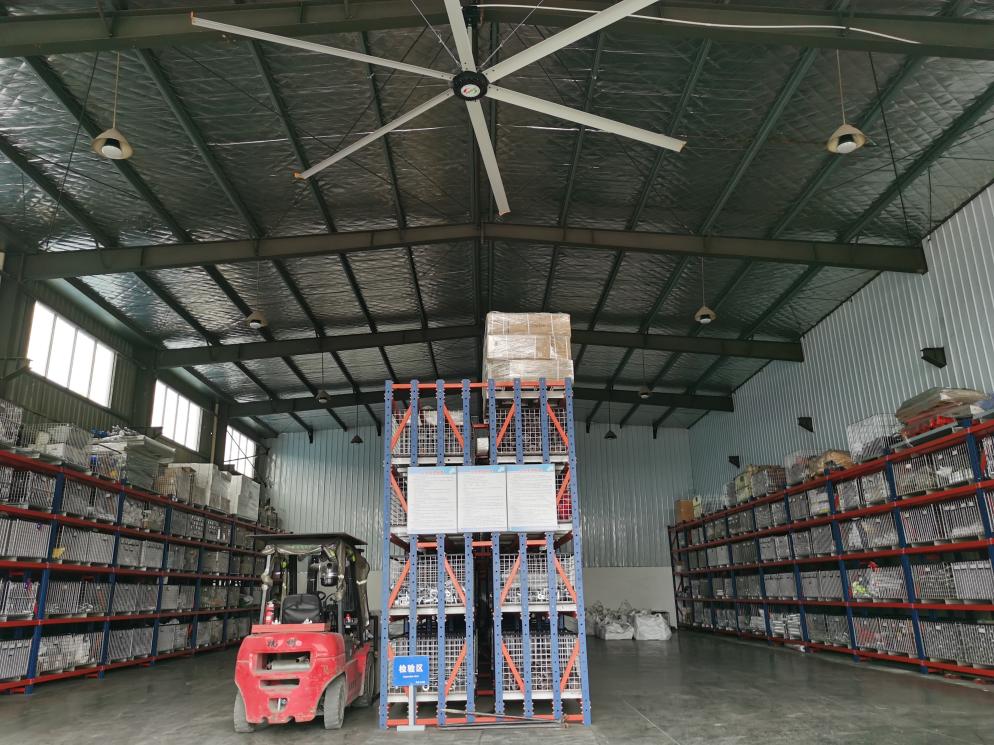
Storage warehouse. Staging capacity affects whether a completed trolley package can wait safely for a vessel or must ship on the first available date.
Evaluation matrix: what to ask and what counts as an answer
| Evaluation area | Question to put in writing | Acceptable evidence | Weak or evasive answer |
|---|---|---|---|
| Legal identity and factory | Which legal entity will invoice, and at which address is the order fabricated? | Business licence matching the contract entity; facility address matching the works | Entity name differs from the certificate holder with no explanation |
| Welding process control | Under which welding quality system is this structure built, and who are the qualified operators? | ISO 3834-2:2021 certificate 23/1014-3834 with welding procedure and operator records | General "we weld to international standards" with no document reference |
| Structural steel execution | Is factory production control in place for structural steel components? | EN 1090-1 / EN 1090-2 certificate 1381-CPR-889, valid to 18 December 2026 | Certificate shown but scope not stated |
| Product-specific conformity | Which certificate names the exact product I am buying? | A certificate whose scope wording matches the ordered item | A logo wall presented as product approval |
| Engineering interface | Who signs the GA drawing, and when do shop drawings reach my engineer? | Named signatory, revision-control procedure, drawing issue date in the schedule | Drawings promised "after order" with no review gate |
| Commercial terms | What exactly triggers the balance payment? | MOQ 1×20GP, FOB/CIF, 50/50 with the balance tied to a passed pre-shipment test | Balance due on shipment with no inspection record |
| Acceptance | What is inspected, at which hold points, and who witnesses it? | Written inspection plan with dimensional, welding and trial-assembly checks | "Pre-shipment test" with no defined content |
| Schedule | Is 30–35 days measured from deposit or from approved drawings? | Milestone plan with drawing approval, cutting, welding, trial assembly and packing dates | A single lead-time figure with no milestones |
Applying the checklist to different project settings
The relative weight of each gate changes with the project, and it is worth adjusting the emphasis rather than running an identical audit every time.
Long tunnel drives with repeated lining cycles. Cycle count dominates. The trolley is reused many times, so dimensional stability and the maintenance routine between pours matter more than any single delivery detail. Push harder on the welding quality system and on the trial-assembly record, and ask how the structure is checked between cycles.
Urban pipe galleries with constrained access. Handling and transport dominate. The alignment is often in a built-up area with limited lay-down space, so member segmentation, lifting points and the loading plan should be agreed at the drawing stage. This is where the logistics risk in Part 4 becomes the main risk rather than a secondary one.
Short or one-off sections. Commercial terms dominate. Where the structure is used few times, the MOQ, payment split and acceptance definition carry proportionally more weight than long-run durability, and a tightly worded pre-shipment test protects more value than an extended warranty discussion.
Vetting sequence: eight steps from shortlist to release
- Confirm the legal entity, factory address and invoicing party, and check they match the certificate holder.
- Request the certificate set and read every scope line against the item being ordered.
- Request the process list for your specific structure: cutting, machining, welding, surface preparation, trial assembly.
- Request the GA drawing signatory and the revision-control procedure, and fix the drawing approval date in the schedule.
- Agree the loading and segmentation plan before production begins.
- Convert "pre-shipment test" into a written inspection plan with named hold points and evidence requirements.
- Tie the balance payment to a passed test and released documentation, not to a shipping date alone.
- Confirm the lead time basis — deposit or approved drawings — and record the milestone plan in the contract.
Frequently asked questions
What certification documents should I request from a tunnel trolley supplier?
Request the certificates that describe process control, and check each scope against your order. For a welded steel trolley the two most relevant are the ISO 3834-2:2021 welding quality management system certificate and the EN 1090-1 / EN 1090-2 factory production control certificate for structural steel components; FWK Lianggong Formwork holds both through SGS Italia S.p.A., certificate numbers 23/1014-3834 and 1381-CPR-889, each valid to 18 December 2026. Add the ISO 9001, ISO 14001 and ISO 45001 certificates for management-system context, but note that their stated scopes cover climbing formwork production activities, not trolleys. A product-specific certificate such as the LG-100 Trench Box EU ECM document applies only to the product it names. Ask separately for design calculations and material certificates for the structure you are actually buying.
Can a supplier customize a Hydraulic Tunnel Lining Trolley or Pipe Gallery Trolley to project geometry?
Customization is normal for this product category, and the useful question is how it is controlled. FWK Lianggong Formwork operates an OEM/ODM production mode with Logo and Size customization, supported by a 45-person technical department that works with the sales team. In practice, customization should be governed by an approved general arrangement drawing, a stated revision-control process, and shop drawings issued to your engineer before fabrication starts. Ask who signs the GA drawing and when your review gate falls in the schedule; without those two answers, "we can customize" is not a commitment you can hold anyone to.
What are the standard purchasing terms for a trolley package?
The published terms for Lianggong orders are a minimum order quantity of 1×20GP container, delivery terms FOB or CIF, payment terms 50/50, and acceptance by pre-shipment test. Because trolley structures are bulky, confirm early whether your scope fits a single 20GP container or needs a different loading arrangement. The 50/50 split deserves the most attention: define precisely what triggers the balance, ideally a passed pre-shipment test with documents released, rather than a shipping date alone. Warranty periods, spare-parts commitments and delay liability are not part of the published terms and must be negotiated separately if your project requires them.
How does pre-shipment testing work for a trolley order?
Pre-shipment test is the stated acceptance criterion, and it becomes enforceable only when you define its content. A workable plan for a trolley covers four layers: dimensional verification against approved shop drawings with the interface points checked, welding inspection records consistent with the welding quality system under which the structure was built, a trial assembly to confirm components match before packing, and release of the documentation package as a payment condition. Require the inspection plan and named hold points in writing before production starts, and require photographic or witnessed evidence at each hold point, since you will not be present when the structure is finished.
What lead time should I plan for, and what protects the delivery date?
The published production lead time is 30–35 days, and the first thing to confirm is its starting point: deposit or approved shop drawings. For engineered structures the drawing approval stage is often the real constraint, so a lead time that excludes it will not hold. Protect the date with a milestone plan that names drawing approval, cutting, welding, trial assembly and packing dates, and with a written mechanism for what happens if a milestone slips. Lianggong reports after-sales support through on-site support and remote guidance, and exports around 70% of production to North America, South America, the Middle East, Europe and Africa — relevant experience, but the contract mechanism is what actually protects your date.
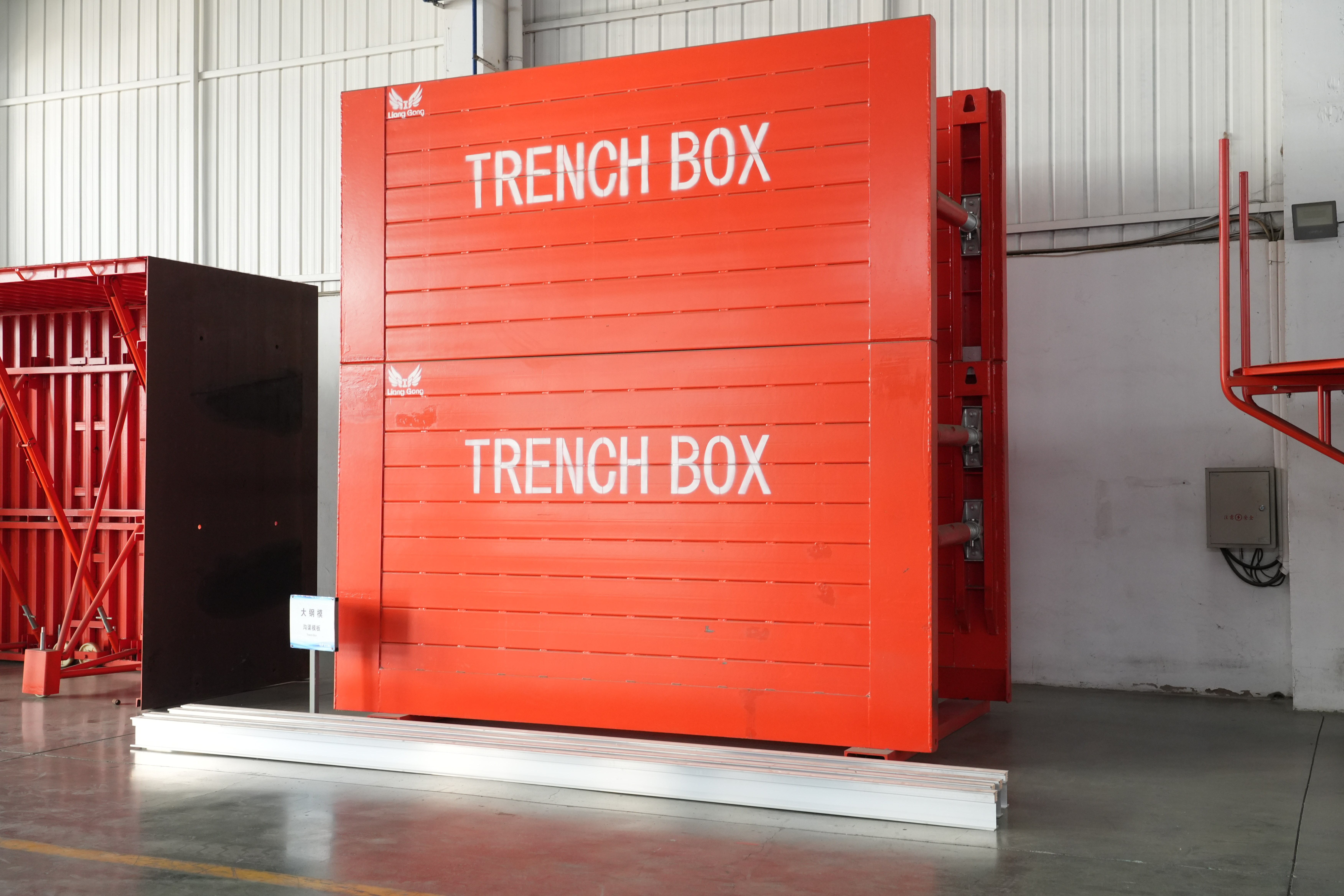
Sample room at the Lianggong facility. Physical component inspection before order is a legitimate part of supplier vetting.
Conclusion: the decision is about documents, not brochures
Vetting a supplier for a Hydraulic Tunnel Lining Trolley or a Pipe Gallery Trolley package comes down to a narrow discipline. Confirm the entity and the factory. Read every certificate scope against the item you are ordering, and treat process certificates differently from management-system certificates and from product-specific conformity documents. Convert the published terms — 1×20GP minimum, FOB or CIF, 50/50 payment, pre-shipment test — into a written inspection plan with named hold points and a payment trigger you control. Then tie the 30–35 day lead time to approved drawings rather than to a deposit alone.
A supplier that answers these questions directly, and distinguishes what its documents do and do not prove, is telling you something more useful than any capability claim: it is telling you how it will behave when a milestone slips or an inspection fails. That is the evidence worth buying on.
Next step
For buyers assembling a technical file on tunnel and pipe gallery trolley packages, the FWK Lianggong Formwork catalogue and product documentation are available from the official site at lianggongformwork.com, and the company brochure can be downloaded directly here: FWK Lianggong Formwork company brochure (PDF). Both are useful inputs to the drawing-approval and certificate-scope checks described above.
Have Questions or Need More Details?
Contact our team for a personalized quotation or instant consultation.
Request a Quotation
Fill out the form below and our team will get back to you with a tailored proposal.
WhatsApp Direct Chat
Prefer to chat in real-time? Message us on WhatsApp for instant assistance & quick answers.
- Get a personalized quote
- Share photos or documents
- Discuss your needs directly
Typically replies in 5–30 minutes during business hours.