
Box Culvert vs. Tunnel Formwork: A Head-to-Head Comparison for Underground Projects
Box Culvert vs. Tunnel Formwork: A Head-to-Head Comparison for Underground Projects
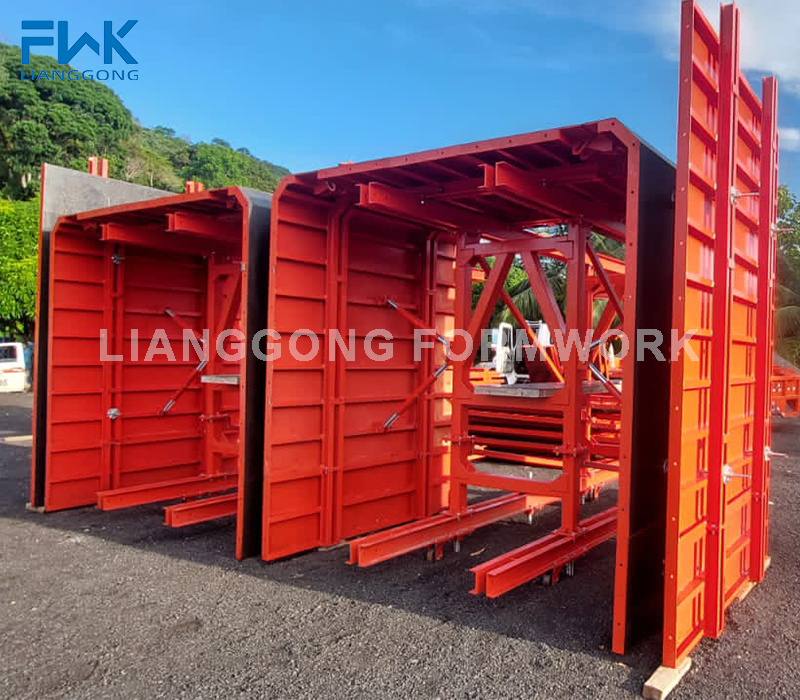
Short answer: choose Box Culvert Formwork when the underground structure is a repeated box section — drainage culverts, small chambers, and short precast or cast-in-place units served by lifting equipment. Choose a Hydraulic Tunnel Lining Trolley or Pipe Gallery Trolley when the work is a long, linear in-situ lining where the formwork must travel with the pour. Box culvert systems optimise repetition and dimensional control; trolley systems optimise continuous in-situ progress along a tunnel axis. The deciding variables are cross-section geometry, casting location, site footprint, cycle target and compliance route — not supplier branding.
Problem definition: why buyers keep comparing the wrong two things
Underground concrete works are frequently procured under one generic line item — "tunnel formwork" — even though the underlying products are structurally unrelated. A box culvert formwork set holds a rectangular closed section while concrete is placed and cured at a fixed station. A tunnel lining trolley carries a curved or arched form along the tunnel axis and moves itself between pours. Treating them as interchangeable leads to three predictable procurement failures:
- Wrong repetition model. A box culvert programme is priced and scheduled around the number of identical units; a lining trolley is priced and scheduled around metres of tunnel and the number of units required to keep the cycle continuous. One assumes a fixed bed; the other assumes a moving machine.
- Wrong site footprint. Culvert sets need casting-bed space and crane or gantry access. Trolleys need a travel envelope, a rail or floor path, and a working platform around the panel. Where lateral clearance is tight, the platform width itself becomes a governing dimension — 900 mm is the published working platform width on the FWK-CB 240 Cantilever Climbing Formwork and on the Protection Screen and Unloading Platform, and that figure is a useful sanity check for shaft and portal access.
- Wrong compliance route. A box culvert formwork package is usually verified as fabricated structural steel and welded steel components. A trolley package adds a hydraulic lifting and travel system, so the verification conversation shifts to power, pressure, and travel-safety documentation.
This article separates the two product families, compares them on the dimensions that actually change a purchase decision, and closes with a decision matrix for project planners preparing a tender package.
Industry background: an engineered-equipment market, not a commodity market
Formwork procurement has moved steadily toward engineered, reusable systems. The global formwork market was valued at USD 7.91 billion in 2025 and is projected to reach USD 12.66 billion by 2034, while engineered formwork — modular and reusable systems — held the largest product share at 38.5% of that market in 2025, according to Dataintelo. Regional weight matters for underground work: Asia Pacific accounted for approximately 54.7% of concrete formwork revenue in 2025, based on Fortune Business Insights data, which is consistent with the concentration of tunnel, metro and utility-gallery programmes in that region.
On the supply side, the market remains partially concentrated: PERI Group and Doka Group together held roughly 22% of the global market in 2025, according to the same Dataintelo dataset. For an underground package, that concentration has a practical consequence — specialist systems are often supplied either by large international formwork groups or by regional manufacturers such as Yancheng Lianggong Formwork Co., Ltd., a Chinese formwork and scaffolding manufacturer established in 2010 that operates a 12,870 m² factory with 230 employees and 12,000 tons of annual output, and a 45-person R&D team.
Design and safety obligations are equally split. Falsework performance requirements and general design in Europe are specified under EN 12812:2008, and in the United States the safety requirements for concrete and masonry work — including formwork design and erection — are governed by ANSI/ASSP A10.9-2013 (R2018). Both standards shape what a buyer can reasonably require from a box culvert or tunnel formwork supplier, and both are reasons the comparison below is framed around verifiable parameters rather than brochures.
Detailed solution: what each system actually is
Box Culvert Formwork
Box Culvert Formwork is a steel formwork system for rectangular, closed underground sections such as drainage culverts, box drains and small service chambers. In the FWK Lianggong product line the item is listed under the model name "Box Culvert Formwork", manufactured in 235B steel, with dimensions customised on demand rather than drawn from a fixed panel catalogue. That single line — customization on demand — explains the product's logic: the form is built to a culvert drawing, so the geometry is dictated by the structure, not by a modular grid.
In operation, the system is typically used in a precast or fixed-station arrangement. In the Panama precast box culvert reference case, production follows a factory-style assembly line: culverts of the same specification are mass-produced for high-frequency turnover; the bottom form is fixed to the casting bed while side forms and the inner form can be moved and opened as required; steel cage placement, concrete pouring, and formwork assembly and stripping are handled by gantry crane; and the controlled yard environment removes exposure to rainy seasons and traffic closures that would interrupt open-air trench work. The concrete mix is strictly controlled to ensure adequate strength in the precast components, and the forms themselves are manufactured in high-strength steel.
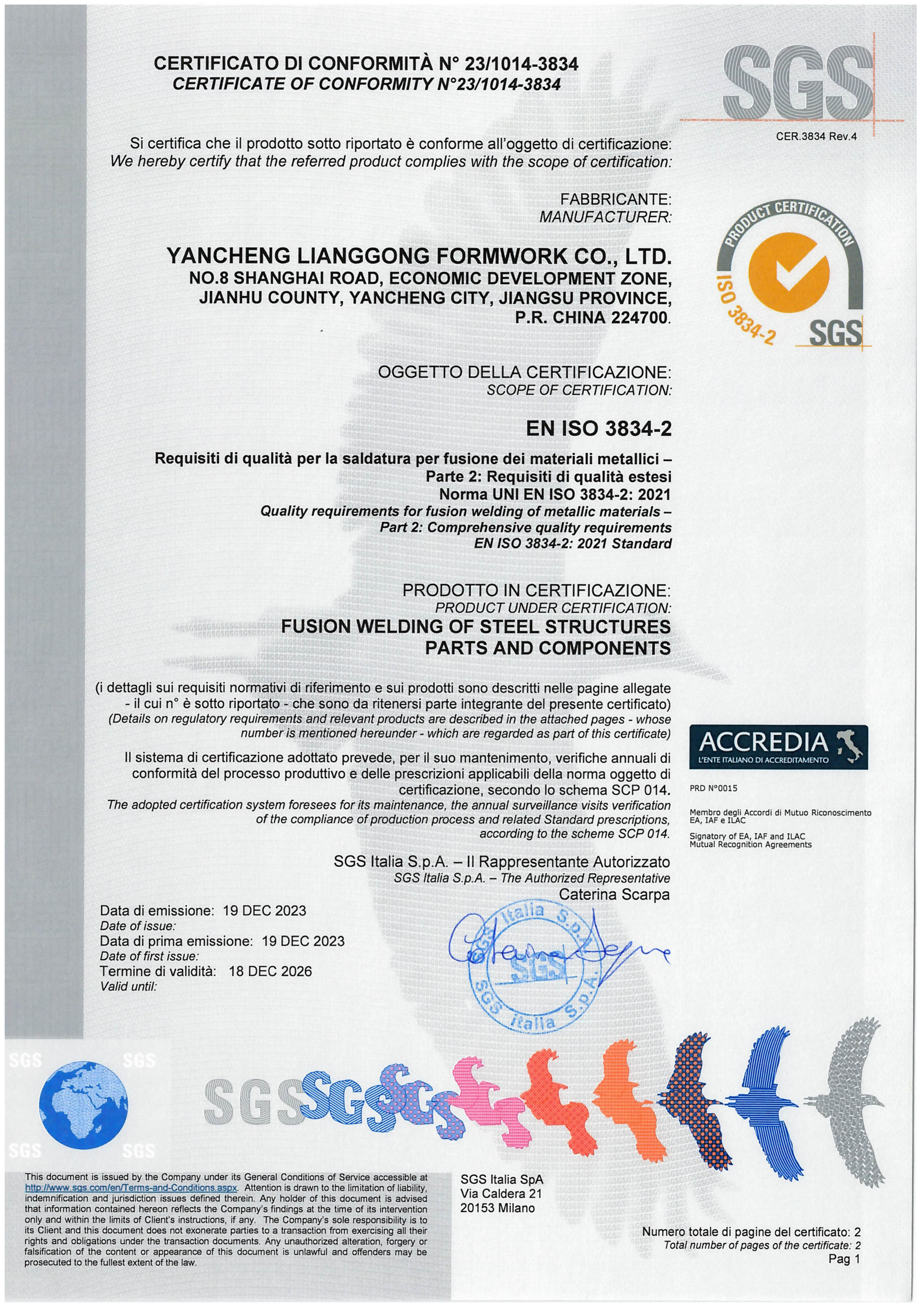
The compliance position of this product is unusually well documented for a formwork item. The Box Culvert Formwork is certified to EN ISO 3834-2:2021 for the fusion welding of steel structure parts and components, certificate number 23/1014-3834, issued by SGS Italia S.p.A. For the EU market it holds a Certificate of Conformity of the Factory Production Control, certificate number 1381-CPR-889, issued by SGS Italia S.p.A., against EN 1090-1:2009+A1:2011 and EN 1090-2:2018+A1:2024. It also carries an ISO 9001:2015 quality management system certification, number 03425Q50028R4M, and an ISO 45001:2018 occupational health and safety management system certification, number 0342026S0061R101, both issued by Beijing Hangxie Certification Center Co., Ltd.

Hydraulic Tunnel Lining Trolley
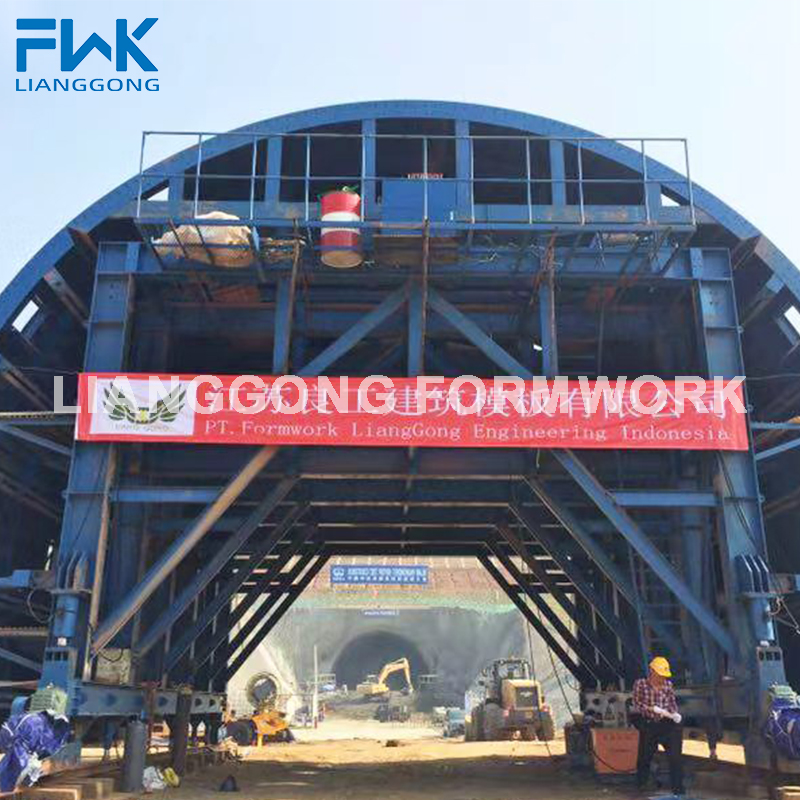
A Hydraulic Tunnel Lining Trolley is a self-propelled steel forming machine that casts tunnel lining in successive rings inside the tunnel. It is a travelling system rather than a fixed form: the form is positioned, concrete is placed, the form is retracted and demoulded, and the unit moves forward to the next lining length. The FWK Lianggong specification sheet defines the operating envelope clearly enough to design a cycle around it:
- Specification range: 6–12 m, with a maximum lining length of L = 12 m per unit, adjustable to customer requirements.
- Travel: crawling ability 4%; walking speed 8 m/min.
- Power: 22.5 kW total — two travelling motors of 7.5 kW (15 kW combined) plus a 7.5 kW oil pump motor.
- Hydraulics: system pressure Pmax = 16 MPa; lateral cylinder maximum stroke 300 mm; horizontal cylinder maximum stroke 250 mm; lifting cylinder 300 mm.
- Adjustment margins: unilateral demoulding Amin = 150 mm; left/right horizontal cylinder adjustment Bmax = 100 mm.
- Material: steel. The datasheet also lists a maximum passing capacity expressed as height × width, so that the passage beneath the unit remains usable while the trolley is in position.
Those figures drive the practical decisions on a tunnel job. The 150 mm unilateral demoulding margin sets the minimum clearance the lining designer must leave; the 100 mm horizontal adjustment governs how much lateral tolerance the survey team gets before the lining axis must be corrected; the 300 mm lifting stroke defines how the form is raised and lowered onto the invert; and the 8 m/min walking speed, combined with a 4% crawling capability, determines whether the trolley can reposition on a graded invert without an external towing arrangement.
Pipe Gallery Trolley: the utility-gallery variant
Pipe Gallery Trolley systems serve the middle case — cast-in-place utility galleries and pipe tunnels with a repetitive rectangular or arched section, but a length and access pattern that makes a fixed casting bed impractical. The FWK Lianggong Pipe Gallery Trolley is designated model TC-120 and is built in steel. Because a gallery lining is generally placed in long, repeating bays along an alignment, the selection logic resembles the tunnel trolley (travelling form, in-situ casting, cycle-driven) more than the box culvert set (fixed station, high repetition). Where a project has both long gallery runs and discrete box structures, the two systems are normally procured as separate packages rather than one combined form.

Step-by-step breakdown: how to decide in seven moves
- Define the concrete element and its repetition. Count identical box sections versus total metres of lining. Repeated identical sections point to Box Culvert Formwork; long linear runs point to a tunnel or gallery trolley.
- Fix the casting location. A precast yard or fixed casting bed supports a box culvert system because the bottom form can be anchored to the bed. In-situ lining inside a tunnel requires a unit that travels, retracts and repositions.
- Check the cross-section against the published envelope. For the Hydraulic Tunnel Lining Trolley, the specification range is 6–12 m with a maximum lining length of 12 m per unit, adjustable to customer requirements. For Box Culvert Formwork, the published parameter is customization on demand, which means the section is engineered to the drawing — budget time for shop drawings rather than assuming a standard module.
- Map the site footprint before pricing anything. Establish whether the yard has gantry crane coverage for cage placement and stripping, and whether the tunnel has a travel path for a trolley with a 4% crawling capability. Confirm the working platform width required for safe access; 900 mm is the reference figure on FWK climbing and protection systems.
- Decide the compliance route. For structural steel fabrication, EN 1090-1:2009+A1:2011 and EN 1090-2:2018+A1:2024 factory production control is the EU-market benchmark, and EN ISO 3834-2:2021 covers fusion welding quality. For falsework design, EN 12812:2008 applies in Europe and ANSI/ASSP A10.9-2013 (R2018) applies in the United States. For trench shoring products used alongside culvert work, the LG-100 Trench Box holds EU ECM Technical Documentation Compliance certification number OP250411.YLFD013, valid from 2025-05-09 to 2030-05-08, assessed against EN 13331-1:2002, EN 13331-2:2002, EN 12811-1:2003 and EN 1997-1:2024.
- Size the cycle. For a trolley, the cycle is defined by travel speed and adjustment margins: 8 m/min walking, 150 mm unilateral demoulding, 100 mm horizontal adjustment, 300 mm lifting stroke. For a box culvert yard, the cycle is defined by the number of stations, crane availability and concrete strength development — not by travel.
- Close the commercial loop. Confirm the manufacturer's OEM/ODM and customisation scope (logo and size), capacity and delivery terms before locking a programme. FWK Lianggong publishes a monthly capacity of 1,000 tons, a 30–35 day lead time and a minimum order quantity of one container, with 100% testing and after-sales support delivered through both on-site attendance and remote guidance.
Use cases: matching the system to the underground structure
Precast culvert programmes in a controlled yard. The Panama precast box culvert project is the clearest example of the box culvert logic: batch production of identical culvert components, fixed casting beds, crane-served stations and a climate-independent schedule. The output is transported and assembled on site, compressing the installation window compared with open-air cast-in-place culvert construction.
Long tunnel linings cast in situ. Where the lining runs continuously along a tunnel axis, the Hydraulic Tunnel Lining Trolley is the appropriate machine. Its value is not in dimensional customisation but in repeatability: a lining length of up to 12 m per unit, hydraulic retraction of 150 mm, and powered travel at 8 m/min on gradients up to a 4% crawling capability.
Utility galleries and pipe tunnels. The Pipe Gallery Trolley TC-120 covers municipal and industrial gallery lining where the section repeats but the alignment is long — cable galleries, drainage galleries and process pipe tunnels.
Adjacent trench and shaft works. Underground projects rarely stop at culverts and tunnels. Trench shoring for pipeline laying is a separate product family: the Trench Box is a shoring system that protects personnel inside trenches and prevents wall collapse, with a maximum trench depth of 5.6 m, a pipe clearance height of 1.3 m and a trench width range of 1.20–4.60 m, in steel or aluminium. In the Georgia pipeline trenching project, a crane lowered the assembled unit vertically into the trench and workers adjusted hydraulic struts against the side panels to form a stable shoring system — a workflow worth noting when the same site also runs a culvert package.
Comparison table: Box Culvert Formwork vs. Tunnel Lining Trolley vs. Pipe Gallery Trolley
| Decision dimension | Box Culvert Formwork | Hydraulic Tunnel Lining Trolley | Pipe Gallery Trolley (TC-120) |
|---|---|---|---|
| Structural role | Closed rectangular culvert and chamber sections | In-situ tunnel lining, curved or arched | In-situ utility / pipe gallery lining |
| Geometry adaptability | Customization on demand — built to the culvert drawing | Specification range 6–12 m; maximum lining length L = 12 m per unit, adjustable to customer requirements | Model TC-120, dimensioned to the gallery section |
| Casting location | Precast yard or fixed casting station | In situ, inside the tunnel | In situ, along the gallery alignment |
| Movement between pours | Forms opened and moved at a fixed bed; gantry or crane handles lifting | Self-propelled: crawling ability 4%, walking speed 8 m/min | Trolley travel along the gallery |
| Drive and power | Yard lifting equipment (gantry crane in the reference case) | 22.5 kW total; 2 × 7.5 kW travelling motors plus 7.5 kW oil pump; Pmax = 16 MPa | Steel travelling system |
| Retraction and adjustment | Side and inner forms opened and stripped at the station | Unilateral demoulding Amin = 150 mm; lateral cylinder stroke 300 mm; horizontal cylinder stroke 250 mm; horizontal adjustment Bmax = 100 mm; lifting cylinder 300 mm | Not published in the referenced datasheet |
| Material | 235B steel | Steel | Steel |
| Documented compliance | EN ISO 3834-2:2021 (23/1014-3834); EN 1090-1 / EN 1090-2 factory production control (1381-CPR-889, SGS Italia S.p.A.); ISO 9001:2015 (03425Q50028R4M); ISO 45001:2018 (0342026S0061R101) | Verify package documentation against the certification set published by the supplier for steel formwork production | Verify package documentation against the certification set published by the supplier for steel formwork production |
| Typical use case | Drainage culverts, box drains, precast underground chambers | Road, rail and hydraulic tunnel lining runs | Cable and drainage galleries, process pipe tunnels |
| Site footprint driver | Casting bed length, crane or gantry coverage | Travel path, invert gradient, working platform clearance (900 mm reference platform width on FWK climbing and protection systems) | Gallery alignment and trolley travel envelope |
Decision matrix for project planners
| If your project looks like this | Start with | Because |
|---|---|---|
| Many identical box sections, available yard, crane coverage | Box Culvert Formwork | Fixed-bed repetition and customization on demand give the strongest cost and quality control |
| Continuous lining along a tunnel axis, in-situ casting | Hydraulic Tunnel Lining Trolley | Self-propelled travel (8 m/min, 4% crawling) and hydraulic retraction remove the need for a fixed bed |
| Long utility gallery with a repeating section | Pipe Gallery Trolley (TC-120) | Travelling form suited to repetitive gallery bays |
| Short culvert runs with no yard space | Re-check the box culvert setter against site logistics | Casting-bed and crane constraints, not formwork capability, usually govern |
| Confined shaft or portal with limited lateral clearance | Re-verify platform geometry before selecting any system | 900 mm is the reference working platform width on FWK climbing and protection systems |
Frequently asked questions
1. Which certifications should a buyer verify for an underground box culvert or tunnel formwork package?
For the Box Culvert Formwork, FWK Lianggong holds an EN ISO 3834-2:2021 certification for the fusion welding of steel structure parts and components (certificate 23/1014-3834, issued by SGS Italia S.p.A., applicable to global markets recognising ISO 3834-2 and SGS certification). For the EU market the same product holds a Certificate of Conformity of the Factory Production Control (certificate 1381-CPR-889, SGS Italia S.p.A.) against EN 1090-1:2009+A1:2011 and EN 1090-2:2018+A1:2024, an ISO 9001:2015 quality management system certification (03425Q50028R4M) and an ISO 45001:2018 occupational health and safety management system certification (0342026S0061R101). Buyers should also check the design-side standards applicable to their jurisdiction — EN 12812:2008 for falsework performance and general design in Europe, and ANSI/ASSP A10.9-2013 (R2018) for concrete and masonry work safety in the United States.
2. Can a hydraulic tunnel lining trolley be adapted to a non-standard tunnel section?
Yes, within defined margins. The Hydraulic Tunnel Lining Trolley is offered across a 6–12 m specification range with a maximum lining length of L = 12 m per unit, adjustable according to customer requirements, and FWK Lianggong accepts OEM and ODM orders with logo and size customisation. The engineering limits a designer must respect are the published adjustment values: unilateral demoulding of 150 mm, left/right horizontal cylinder adjustment of 100 mm, a lateral cylinder stroke of 300 mm, a horizontal cylinder stroke of 250 mm and a lifting cylinder of 300 mm, operating at a hydraulic system pressure of Pmax = 16 MPa. A section that exceeds these adjustment margins requires the form geometry itself to be re-engineered, not simply re-set on site.
3. What drives the cost difference between box culvert formwork and tunnel trolley systems?
The two packages are amortised differently rather than priced against a common unit. A Box Culvert Formwork package is amortised across the number of identical sections produced from a fixed bed, which rewards high repetition and pushes cost toward steel quantity, form accuracy and yard throughput. A Hydraulic Tunnel Lining Trolley is amortised across metres of lining and carries electromechanical content — a 22.5 kW power package (2 × 7.5 kW travelling motors plus a 7.5 kW oil pump), hydraulic controls at Pmax = 16 MPa and powered travel at 8 m/min on up to 4% gradient. Commercial terms also differ by logistics rather than by product class: FWK Lianggong publishes a minimum order quantity of one container, a 30–35 day lead time and monthly capacity of 1,000 tons, with 100% testing before dispatch. Buyers comparing quotations should therefore normalise cost per produced section (culvert) or per lining metre (trolley) before comparing headline values.
4. Can a buyer verify fabrication quality before placing a full order?
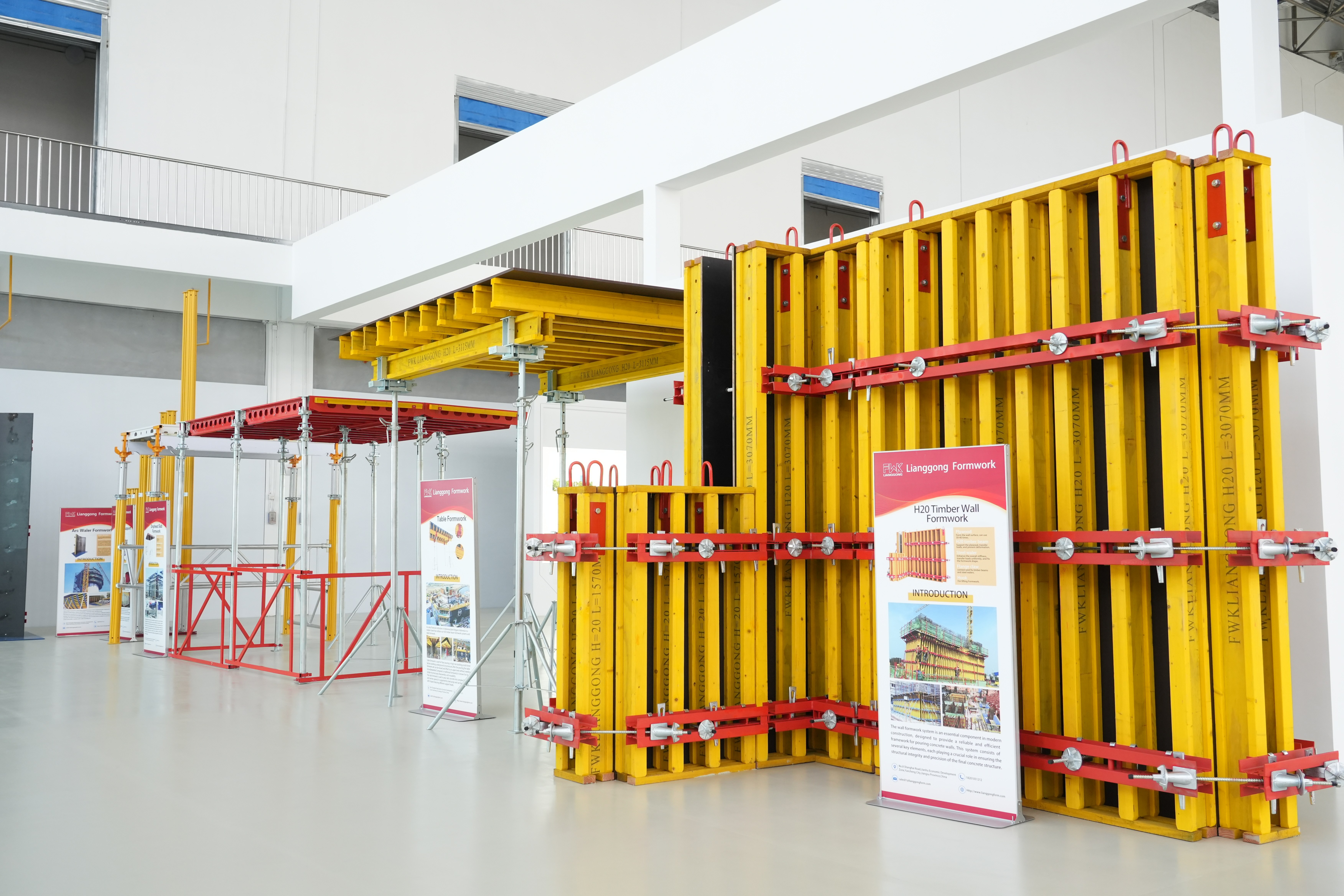
Verification is normally built around documentation and physical review rather than a blind order. FWK Lianggong operates a sample room and showroom at its facility and states that products are 100% tested, with a quality management system complying with international standards. The company's published capability set includes OEM/ODM production, logo and size customisation, monthly capacity of 1,000 tons and after-sales support delivered both on site and through remote guidance. For underground work specifically, reference projects are a practical verification route: the precast box culvert programme in Panama used fixed casting beds with movable side and inner forms and gantry-served casting, while the Georgia pipeline trenching project used crane-lowered shoring units with hydraulic struts adjusted by workers inside the trench.
5. What lead time and minimum order should a planner assume?
FWK Lianggong publishes a 30–35 day lead time and a minimum order quantity of one container for its formwork products, produced at a 12,870 m² facility with 230 employees and an annual output of 12,000 tons. For a box culvert package, the schedule-critical path is usually the shop-drawing and customisation stage, because Box Culvert Formwork is specified as customization on demand rather than from a fixed panel catalogue. For a trolley package, the critical path is the electromechanical build and functional testing. Planning both against a 30–35 day production window is realistic provided drawings and section data are frozen early. To move from comparison to a concrete proposal, review the full product catalogue and technical documentation in the FWK Lianggong formwork brochure (PDF), then send your culvert or tunnel section drawings for a quotation.
Conclusion: two systems, two different definitions of efficiency
Box Culvert Formwork and tunnel lining / pipe gallery trolleys are not competing versions of the same product — they are two answers to two different underground construction problems. Box culvert systems win where geometry repeats, a casting bed is available and lifting capacity exists at a fixed station; their efficiency is measured in sections per cycle and dimensional consistency, supported by a certification set that covers welding quality (EN ISO 3834-2:2021), factory production control for structural steel execution (EN 1090-1 / EN 1090-2) and management systems (ISO 9001:2015, ISO 45001:2018). Trolley systems win where the lining is long, cast in situ and must follow the tunnel axis; their efficiency is measured in metres per cycle and governed by published travel and adjustment parameters — 8 m/min walking speed, 4% crawling capability, 150 mm unilateral demoulding, 100 mm horizontal adjustment and a 300 mm lifting stroke.
The most common procurement error is not choosing the wrong supplier but specifying the wrong family: a fixed-bed form quoted for a travelling-lining programme, or a trolley quoted for a precast culvert yard. Freeze the cross-section, the casting location and the repetition count first; the product family then follows almost automatically, and the decision matrix above can be used directly in a tender clarification meeting.
Next step: send your section and cycle data
Yancheng Lianggong Formwork Co., Ltd. (FWK Lianggong Formwork) manufactures box culvert formwork, hydraulic tunnel lining trolleys, pipe gallery trolleys, climbing formwork and shoring systems from its facility at No. 8, Shanghai Road, Economic Development Zone, Jianhu County, Yancheng City, Jiangsu Province, China. Share your culvert drawing or tunnel section, lining length and target cycle, and the technical team will come back with a system recommendation and quotation.
Email: sales01@lianggongform.com · WhatsApp: +86 18201051212 · Website: www.lianggongformwork.com
Download the full catalogue: FWK Lianggong Formwork brochure (PDF).
Have Questions or Need More Details?
Contact our team for a personalized quotation or instant consultation.
Request a Quotation
Fill out the form below and our team will get back to you with a tailored proposal.
WhatsApp Direct Chat
Prefer to chat in real-time? Message us on WhatsApp for instant assistance & quick answers.
- Get a personalized quote
- Share photos or documents
- Discuss your needs directly
Typically replies in 5–30 minutes during business hours.