How to Build a Reliable Formwork Supply Chain: A 2026 Partnership & Execution Playbook
How to Build a Reliable Formwork Supply Chain: A 2026 Partnership & Execution Playbook
Procuring formwork is not a one-time transaction. The buyer question that matters most at the decision and execution stage is not “which panel do I order,” but “which supplier can I rely on across multiple projects, deliveries, and site conditions.” This article explains how industrial buyers can build a long-term formwork supply chain, what verifiable supplier capabilities to look for, and how to execute a partnership that reduces risk, controls cost, and keeps projects moving.
For more than a decade, Yancheng Lianggong Formwork Co., Ltd. (branded as FWK Lianggong Formwork) has manufactured formwork and scaffolding systems for contractors, distributors, and engineering teams worldwide. The company operates a 12,870㎡ facility in Jianhu County, Yancheng City, Jiangsu Province, China, employs 230 people, and produces an annual output of 12,000 tons. Around 70% of its products are exported to North America, South America, the Middle East, Europe, and Africa. FWK Lianggong Formwork also offers OEM and ODM services, supported by a 45-person R&D team. Established in 2010, the company has accumulated over 14 years of factory experience and reports a monthly production capacity of 1,000 tons.
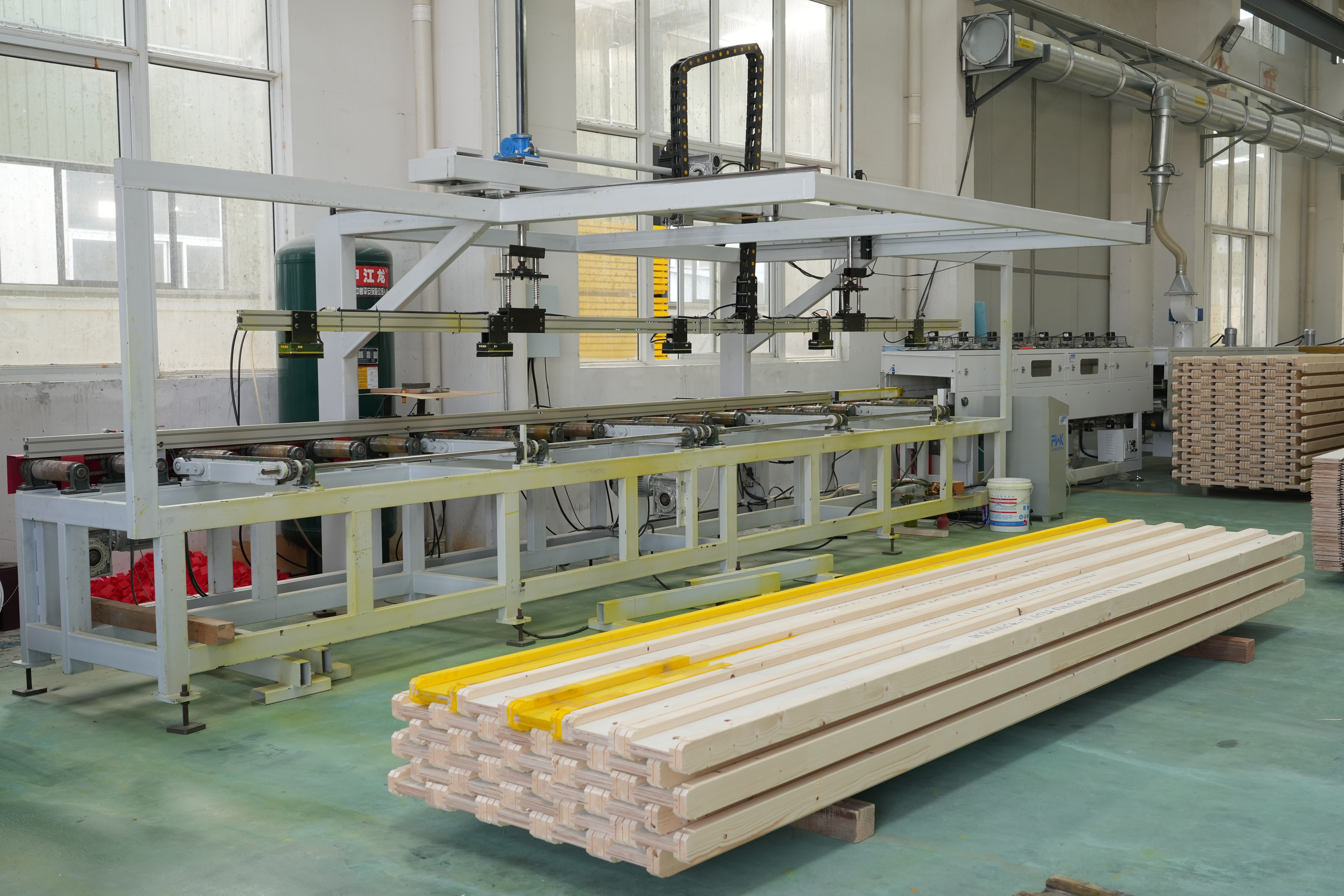
Timber beam processing at FWK Lianggong Formwork’s manufacturing facility.
Why Formwork Buyers Should Think Beyond the First Order
Formwork is a capital asset that directly affects concrete quality, construction cycle time, site safety, and labor efficiency. A single poor-quality delivery can cause rework, schedule delays, and unsafe working conditions. A reliable supply chain reduces those risks through consistent product quality, transparent lead times, and responsive after-sales cooperation.
Long-term partnerships also change the economics of formwork. A system that can be reused across multiple projects—such as H20 timber beam formwork with a reported turnover rate of approximately 26–40 times and double-sided usability—generates far lower total cost than a cheaper system that fails quickly. In this context, supplier selection is not a purchasing decision; it is a long-term operational decision.
What a Long-Term Formwork Partnership Should Cover
A dependable supply relationship covers more than product price. Buyers benefit from defining a shared framework at the start of the relationship. The typical components include:
- Product consistency: Standardized dimensions, materials, and production tolerances that remain stable across batches.
- Capacity and lead time: A supplier’s monthly output and production planning must match the buyer’s project schedule and reorder rhythm.
- Quality inspection: Pre-shipment testing and documented factory inspection reduce surprises at the job site.
- OEM/ODM flexibility: Custom dimensions, branding, drawings, and project-specific modifications require a supplier with engineering capability.
- After-sales support: Maintenance guidance, replacement parts, and responsive communication affect on-site continuity.
The Supplier Capability Checklist
Use the following checklist when evaluating a formwork supplier for a long-term relationship:
- Factory scale and equipment: Does the supplier have the machinery to control quality? FWK Lianggong Formwork, for example, operates a gantry machining center, sheet laser cutting machine, CNC 5600 double-head precision saw, shot blasting machine, aluminum formwork profile punching and sawing integrated machine, automatic comb-teeth dispensing machine, and industrial welding robots.
- Production capacity: FWK Lianggong Formwork states a monthly production capacity of 1,000 tons and an annual capacity of 12,000 tons, which means it can handle repeat orders without breaking the supply chain.
- Engineering support: A 45-person R&D team enables design adjustments and custom fabrication, which is essential for OEM/ODM orders.
- Export experience: With 70% export ratio across North America, South America, the Middle East, Europe, and Africa, the supplier is familiar with international shipping, documentation, and communication.
- Quality control system: Look for documented procedures such as “Three Inspections and One Review” covering production inspection, quality inspection, factory inspection, and final acceptance re-check.
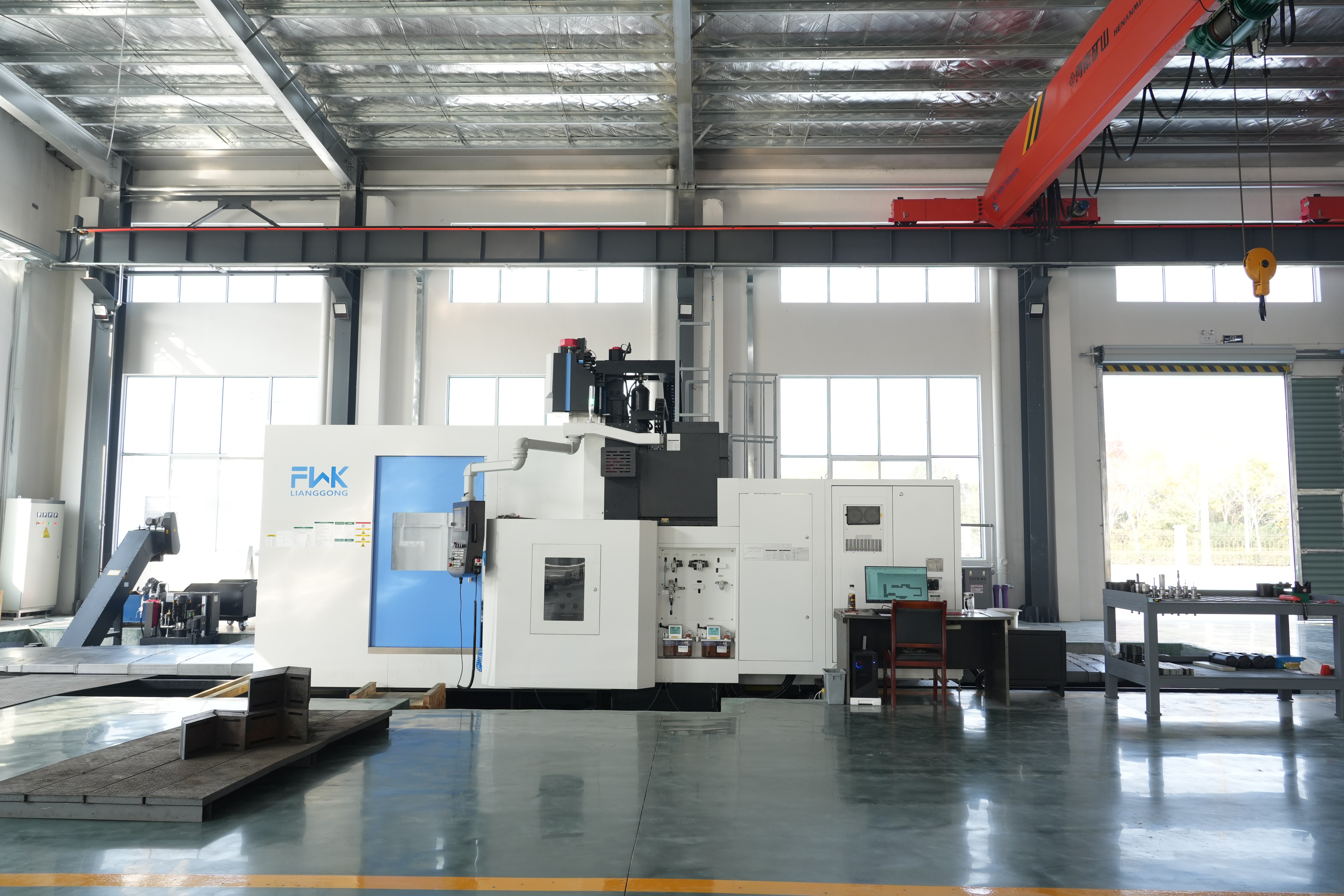
Gantry machining center used for precision formwork component processing.
How to Structure a Formwork Partnership for Repeat Projects
Long-term buyers typically benefit from a structured, repeatable process. The following workflow can be adapted to most global procurement teams:
- Define the system scope: Identify which product families the partnership will cover—wall formwork, slab formwork, column formwork, climbing systems, shoring, or site access. This determines the supplier’s production mix and inventory planning.
- Align technical specifications: Share drawings, concrete pressure requirements, panel dimensions, and material standards. For custom systems, use the supplier’s engineering team early in the process.
- Agree on quality control points: Define pre-production samples, in-process inspection, and pre-shipment testing. Both sides should know the acceptance criteria before manufacturing begins.
- Set commercial terms: Confirm order quantities, payment structure, delivery terms, and handling of replacement parts. FWK Lianggong Formwork, for example, works with MOQs starting at 1×20GP or 1 set depending on the product, with FOB/CIF delivery, pre-shipment test acceptance, and 50/50 payment terms. Lead time is typically 30–35 days.
- Plan logistics and site mobilization: Confirm packaging, loading, shipping documents, and on-site storage requirements before the goods arrive.
- Create a feedback loop: Share field performance data, maintenance issues, and usage patterns with the supplier. This supports product improvements and more accurate future planning.
Key Formwork Systems for a Diversified Supply Relationship
Buyers who manage different site conditions and project types benefit from a supplier that can provide multiple systems under one partnership. FWK Lianggong Formwork’s main product line includes H20 timber beam formwork, steel formwork, steel frame formwork, aluminum formwork, aluminum frame formwork, plastic formwork, hydraulic auto-climbing formwork, cantilever climbing formwork, drophead slab formwork, Skydeck, box culvert formwork, trench box, tunnel formwork, single-side bracket, steel props, ring-lock scaffolding, and plywood.
This breadth matters in execution. A contractor that wins a high-rise residential project may need steel frame formwork for core walls, aluminum frame formwork for repetitive slabs, and protection screens for safety. A civil contractor may need box culvert formwork, trench boxes, and tunnel lining systems. Consolidating multiple systems with one proven supplier reduces coordination cost and ensures consistent quality standards.
H20 Timber Beam Formwork: The Flexible Workhorse
H20 timber beam formwork is commonly used for walls, slabs, columns, and special-shaped structures. FWK Lianggong Formwork’s H20 system includes flexible slab formwork, table slab formwork, timber column formwork, and timber wall formwork. The panel weighs 65 kg/m², the panel depth is 338 mm, and the maximum one-time casting height is 12 m. The typical material composition is H20 timber beam, plywood, steel waler, and flange claw.
One advantage of H20 timber beam systems is on-site adaptability. Throughout the construction process, the timber beams and panels can be freely cut and reused, significantly improving material utilization. This is particularly valuable for projects with irregular shapes, medium-scale construction, large-area horizontal structures, and residential building construction.
Steel Frame Formwork: High Rigidity and Reuse
Steel frame formwork is a common choice for vertical structures where concrete finish, verticality, and flatness matter. The FWK-SNF 65, for example, has a panel weight of 39 kg/m², a maximum panel size of 3 m × 1.2 m, a panel depth of 63.5 mm, a maximum one-time casting height of 12 m, and a maximum permissible lateral pressure of 60 kN/m². It is made of Q355 steel and 12 mm plywood.
FWK Lianggong also supplies the 120 Steel Frame Formwork (FWK-SOF 120) with a panel weight of 51 kg/m², maximum panel size of 3.3 m × 1.35 m, and panel depth of 120 mm. Steel frame systems are suited to high-rise and super high-rise buildings, core walls, shear walls, columns, and variable cross-section walls where the concrete appearance requirements are strict.
B-FORM Steel Frame Formwork: Speed and System Efficiency
FWK Lianggong’s B-FORM steel frame formwork is positioned as a modular, pre-assembled system. According to the company’s comparison data, B-FORM panels can be used 20–40 times depending on the model, while the steel frame can be used more than 100 times. The reported installation speed is 20–25 m² per person per day, compared with 12–15 m² per person per day for conventional plywood and simple steel frame systems. Annual maintenance cost is stated as less than 5%, and the system can be operated by a single worker.
B-FORM uses a high-strength steel frame combined with laminated board. It is more flexible and lighter than conventional B-FORM systems, and it is designed for rapid installation without repeated adjustments.
Aluminum and Aluminum Frame Formwork: Weight Efficiency
Aluminum frame formwork is used where panel weight and handling speed are critical. The FWK-FAF 117 has a panel weight of 25 kg/m², maximum panel size of 3 m × 1 m, panel thickness of 117 mm, maximum one-time casting height of 6 m, and maximum permissible lateral pressure of 60 kN/m². It is made of aluminum 6061-T6 and 15 mm plywood.
Skydeck (FWK-SKYDECK) is another aluminum-based slab formwork product. It has a maximum load capacity of 90 kN/m², a panel weight of 18 kg/m², and a maximum panel size of 1.5 m × 0.75 m. Lighter panels can lead to lower labor costs and faster installation in repetitive slab applications.
Climbing and Protection Systems for High-Rise Work
For high-rise construction, hydraulic auto-climbing formwork and protection screens are essential. The FWK-ACB 120 is available in diagonal brace and truss configurations. It uses an electronically controlled hydraulic lifting system with a cylinder stroke of 300 mm, rated thrust of 100 kN and 120 kN, and double cylinder synchronization error ≤20 mm. The protection screen and unloading platform has an allowable vertical load of 30 kN, allowable horizontal load of 60 kN, and working platform width of 900 mm. These systems support safer vertical construction and shorter floor cycles.
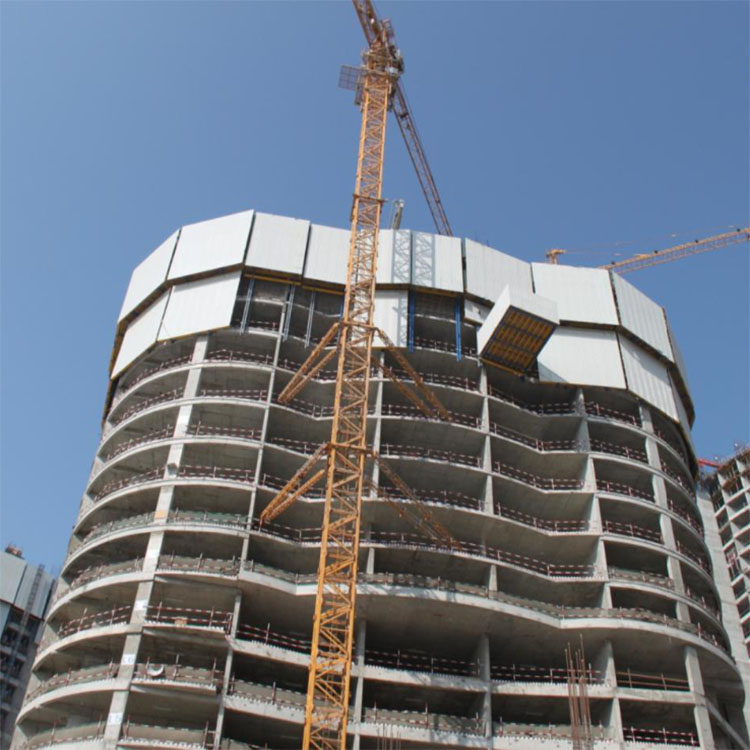
Protection screen and unloading platform for high-rise construction safety.
Civil and Infrastructure Formwork
Infrastructure projects require specialized systems. FWK Lianggong Formwork supplies box culvert formwork (made of 235B steel, customizable on demand), trench boxes (steel or aluminum, customizable width from 1.20–4.60 m, maximum trench depth 5.6 m), and hydraulic tunnel lining trolleys with specifications including 6–12 m lining length, maximum lining length of 12 m per unit, walking speed of 8 m/min, total power of 22.5 kW, and maximum hydraulic system pressure of 16 MPa. Tunnel formwork for housing (FWK-TUN 63) is available with a weight of 75 kg/m² and normal height of 3 m, achieving a construction rate of about 3 days per floor.
Managing Risk in a Long-Term Formwork Relationship
Long-term buyers must manage both product risk and process risk. FWK Lianggong Formwork applies a “Three Inspections and One Review” system across different product lines. This covers production inspection, quality inspection, factory inspection, and final review before shipment. Buyers should ask for the equivalent documentation from any supplier.
Common risk points and controls include:
- Panel peeling or scratching: Clean the panel and apply a release agent before and after each use. Handle panels carefully during installation to avoid contact with rebars.
- Steel frame deformation: Stack steel frames with at least three support points on the bottom surface. Stacking height must not exceed 18 frames per stack, and no more than two stacks should be placed on site at any time.
- Rust and paint peeling: Do not strike the steel frame with metal tools. Use a rubber mallet if needed.
- Poor joint fit: Correct joint deformation by applying reverse pressure, or use an expander to restore the shape.
- Aluminum formwork damage: Use pins in a standardized manner, seal any gaps with double-sided tape or sealing strips, and control support rod spacing to no more than 1,200 mm with steel base plates at the bottom.
- H20 timber beam issues: Store in a dry environment, implement fire prevention management, use within specified load limits, and conduct regular inspections.
A documented risk-control system helps buyers reduce on-site losses and maintain safety standards over the lifetime of the equipment.
Comparing Supplier Models: What a 2026 Buyer Should Weigh
When choosing a long-term formwork partner, buyers should compare supplier models in a structured way. The table below summarizes factors that matter in partnership decisions.
| Factor | What to Verify | Why It Matters for Long-Term Supply |
|---|---|---|
| Product breadth | Wall, slab, column, climbing, shoring, civil systems | Fewer suppliers, easier coordination, consistent quality |
| Production capacity | Monthly/annual output, equipment, workforce | Capacity must support repeat orders and schedule changes |
| Engineering capability | R&D team size, OEM/ODM experience | Project-specific adaptation and custom branding |
| Quality process | Inspection stages, pre-shipment testing | Reduces non-conforming goods at site |
| Commercial flexibility | MOQ, payment terms, delivery terms | Aligns with project cash flow and logistics |
| Field support | Maintenance guidance, replacement parts | Protects equipment investment over years |
Commercial Terms Buyers Should Confirm Before Execution
At the execution stage, commercial terms become a practical requirement. Typical terms offered by FWK Lianggong Formwork include:
- Minimum order quantity: 1×20GP container for most products; 1 set for custom or project-based systems such as climbing formwork and tunnel lining trolleys.
- Delivery terms: FOB or CIF.
- Acceptance: Pre-shipment test before delivery.
- Payment: 50/50 (commonly 50% deposit and 50% before shipment).
- Lead time: Approximately 30–35 days, supported by a monthly production capacity of 1,000 tons.
Buyers should confirm these terms in writing and align them with their project schedule.
Use Cases: How Different Buyers Benefit
Contractors Managing High-Rise Residential Projects
A contractor engaged in high-rise residential construction needs formwork systems that accelerate floor cycles. Steel frame and aluminum frame systems, such as FWK-SNF 65 and FWK-FAF 117, reduce assembly labor and maintain concrete surface quality. Protection screens and unloading platforms support safe vertical work.
Distributors Serving Multiple Construction Segments
Distributors need a supplier that can supply a wide catalog and respond to reorders. FWK Lianggong Formwork’s product range includes H20 timber beam formwork, steel frame formwork, plastic formwork, Skydeck, steel props, ring-lock scaffolding, and trench boxes. This allows distributors to consolidate sourcing and reduce logistics complexity.
Civil Contractors Executing Infrastructure Tenders
Projects involving culverts, tunnels, and deep trenches require engineered custom equipment. Box culvert formwork, hydraulic tunnel lining trolleys, and trench boxes can be manufactured to project specifications. A supplier with engineering and R&D capacity can participate in early design and deliver systems that match the tender requirements.
Executing a Partnership: From Samples to First Delivery
For buyers who have selected a supplier, the execution phase can be managed through four steps:
- Request product samples or drawings: Validate dimensions, weight, and material quality before committing to a full container.
- Approve a pre-production sample: For custom systems, ensure the manufacturer confirms every specification.
- Schedule pre-shipment inspection: Arrange quality checks before cargo release.
- Build a reorder plan: Share your expected demand pattern so the supplier can reserve production capacity.
The brochure below provides a full overview of FWK Lianggong Formwork’s product range and manufacturing capability.
Download the FWK Lianggong Formwork Brochure (PDF)
Frequently Asked Questions
Q: What certifications or compliance standards should I check when forming a long-term formwork supply partnership?
Buyers should verify that the supplier follows recognized production and safety standards. FWK Lianggong Formwork states that it operates a quality management system compliant with international standards. It also holds CE (EN 1090-1), ISO 9001, and ISO 3834 certifications, according to its industry report. Relevant regional standards include ANSI/ASSP A10.9-2013 for concrete and masonry work in the United States and EN 12812:2008 for falsework in Europe. However, these regional standards do not replace direct verification: buyers should request certificates, factory inspection reports, and pre-shipment test documentation for each order.
Q: Can FWK Lianggong Formwork handle custom or OEM/ODM formwork across different product types?
FWK Lianggong Formwork supports OEM and ODM orders, and its technical department works with the sales department to ensure customer needs are fully satisfied. The company’s 45-person R&D team and manufacturing equipment—including a gantry machining center, sheet laser cutting machine, CNC precision saw, aluminum profile processing machinery, and industrial welding robots—enable project-specific fabrication. Examples include box culvert formwork (customizable on demand), trench boxes (custom widths), curved steel formwork, and hydraulic tunnel lining trolleys (12 m maximum lining length, adjustable according to customers). Buyers with custom requirements should submit drawings and technical specifications for a feasibility review.
Q: What is the MOQ, lead time, and payment structure for repeated formwork orders?
For most standard systems, FWK Lianggong Formwork operates with a minimum order quantity of 1×20GP container; project-based systems such as climbing formwork, protection screens, and tunnel lining trolleys can start from 1 set. Delivery terms are typically FOB or CIF, acceptance is based on pre-shipment testing, and payment is commonly 50/50. Operational details include a monthly production capacity of 1,000 tons and a lead time of approximately 30–35 days. Buyers planning repeat orders should reserve production slots through a rolling forecast.
Q: What after-sales support and maintenance guidance can I expect in a long-term partnership?
FWK Lianggong Formwork provides maintenance guidance as part of its after-sales service. For B-FORM steel frame systems, the reported annual maintenance cost is less than 5%, and standardized components support easy replacement. For panels, users should clean the surface and apply release agent before and after each use. Steel frames must be stacked with at least three support points, no more than 18 frames per stack, and no more than two stacks on site. Aluminum formwork requires careful handling, standardized pin use, and sealing of joint gaps. Timber beams should be stored in a dry environment and inspected regularly.
Q: How do I transition from a trial order to a full supply partnership?
Start with a sample or a small container order to verify quality, documentation, and communication. After confirming product conformity, share your project pipeline and rolling demand forecast. The next step is to align commercial terms—MOQ, payment terms, delivery schedule, and quality inspection points. For a full partnership, request pre-shipment inspection reports, replacement-parts pricing, and a capacity commitment from the supplier. FWK Lianggong Formwork’s export ratio of 70% across five regions indicates experience with international logistics and cross-border communication, which helps when transitioning from a test order to a structured supply agreement.
The practical next step for buyers ready to move from evaluation to execution is to request a quote, product sample, or a detailed product catalog. FWK Lianggong Formwork’s team is available to review project drawings and provide lead time and pricing. Contact David Liu at sales01@lianggongform.com or +86 18201051212 / WhatsApp +86 18201051212.
Ready to build a more reliable formwork supply chain?
Request a quote or sample from FWK Lianggong Formwork to start your next project with verified capacity and global export experience.
Have Questions or Need More Details?
Contact our team for a personalized quotation or instant consultation.
Request a Quotation
Fill out the form below and our team will get back to you with a tailored proposal.
WhatsApp Direct Chat
Prefer to chat in real-time? Message us on WhatsApp for instant assistance & quick answers.
- Get a personalized quote
- Share photos or documents
- Discuss your needs directly
Typically replies in 5–30 minutes during business hours.