H20 Timber Beam Formwork Supplier Comparison: FWK Lianggong vs. Conventional Suppliers – A 2026 Procurement Guide for Industrial Buyers
H20 Timber Beam Formwork Supplier Comparison: FWK Lianggong vs. Conventional Suppliers – A 2026 Procurement Guide for Industrial Buyers
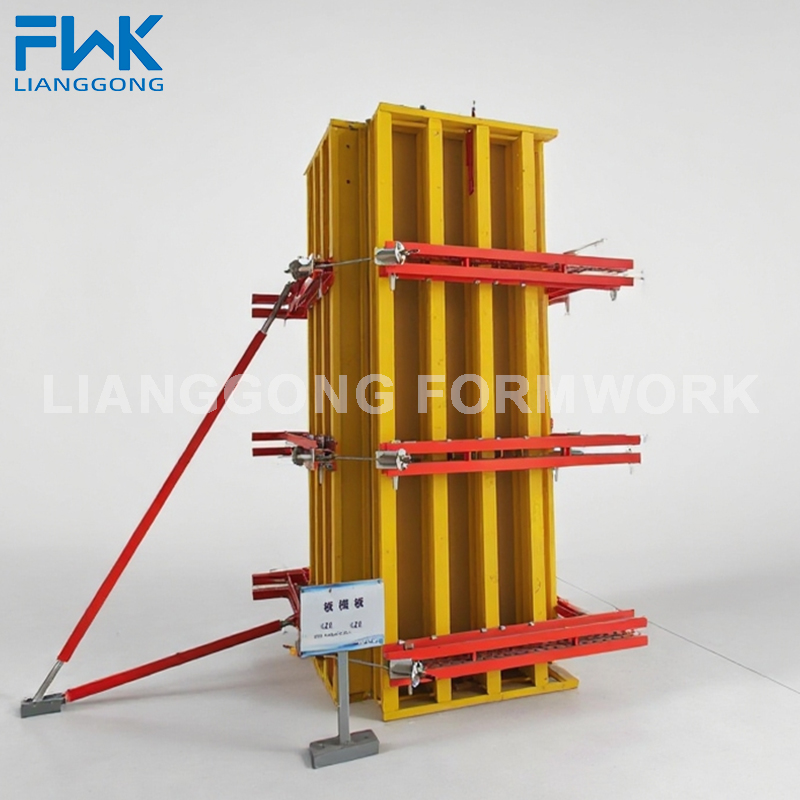
When procuring H20 timber beam formwork, industrial buyers must choose between specialized manufacturers like FWK Lianggong Formwork and conventional suppliers offering standard products. This guide provides a data-driven comparison covering product performance, supplier capabilities, a three-step decision model, and a real-world case study to support informed procurement decisions.
1. Product Comparison: FWK Lianggong H20 Timber Beam Formwork vs. Conventional H20 Timber Beam Formwork
Technical Parameters
- Primary Material: FWK Lianggong uses Q355B steel for the structural frame, while conventional formwork often uses lower-grade steel or standard timber beams.
- Weight: FWK panels weigh approximately 65 kg/m²; conventional panels may be heavier or lighter depending on material quality.
- Maximum One-Time Casting Height: Up to 12 meters, suitable for both wall and column applications.
Applicable Scenarios
FWK Lianggong H20 timber beam formwork is more suitable for projects with various special-shaped structures, such as special-shaped component construction, medium-scale engineering, large-area horizontal structures, and residential building construction. Conventional H20 timber beam formwork, on the other hand, is better suited for low-cost small-scale engineering, civil housing construction, and projects with low quality requirements.
Cost Analysis
The cost advantage of FWK Lianggong formwork stems from a dual service life with a single purchase and a high reusability rate – a turnover rate of about 26-40 times (double-sided usable) compared to the 5-8 times (single-sided only) of conventional formwork. This leads to a lower total cumulative cost over the project lifecycle, although the initial investment is higher.
Maintenance and Durability
Maintenance requirements for FWK Lianggong formwork are lower: the material resists blistering after rainwater evaporation when exposed to direct sunlight at 35°C, requiring only a release agent for daily use. Annual maintenance costs remain under 5% with near-zero component replacement, whereas conventional alternatives can incur over 15% annual costs and significant material loss.
2. Supplier Comparison: Chinese Factory (FWK Lianggong) vs. International Brands (Doka, PERI)
| Supplier Attribute | FWK Lianggong (China) | Doka / PERI (International) |
|---|---|---|
| Price | Competitive, lower unit cost; offers a higher initial investment but lower long-term costs through multi-project reuse. | Higher initial cost; brand premium and global service network contribute to elevated pricing. |
| Customization | High flexibility: supports OEM/ODM, logo and size customization; dedicated technical department for tailored designs. | Limited customization; standard product lines with fixed specifications. |
| Lead Time | 30-35 days for standard orders; monthly production capacity of 1,000 tons. | Longer lead times (typically 8-12 weeks) due to global supply chain and order backlog. |
| After-Sales Service | On-site support and remote guidance; export ratio over 70% to regions including Middle East, Americas, Europe. | Global network of service centers; higher service fees and response times in remote areas. |
3. Decision Model: A 3-Step Approach for Selecting H20 Timber Beam Formwork
- Step 1 – Define Use Scenario: Identify project type: high-rise vs. low-rise, typical vs. special-shaped structures, residential vs. infrastructure. For special shapes and medium-scale works, FWK Lianggong formwork offers superior adaptability.
- Step 2 – Match Technical Parameters: Evaluate load-bearing requirements, permissible concrete pressure, and panel reuse cycles. FWK Lianggong provides 20-40 panel reuses (or up to 26-40 times) versus 5-8 for conventional products, and the steel frame supports over 100 additional reuse cycles.
- Step 3 – Calculate Total Cost of Ownership: Consider initial procurement, maintenance (under 5% annual vs. over 15%), and expected service life. The dual service life of FWK Lianggong formwork results in lower cumulative costs despite higher initial investment.
4. Case Study: Kalimantan Dam Project (Indonesia)
An EPC contractor chose FWK Lianggong’s H20 Timber Beam Formwork System for the Kalimantan Dam concrete works. The project involved large-volume concrete casting with irregular and curved sections. The system demonstrated strong on-site adaptability: timber beams and panels could be freely cut and reused, improving material utilization. The lightweight components increased handling efficiency, and the system delivered a high-quality concrete surface finish, eliminating the need for post-processing. The project team achieved a shortened construction schedule while maintaining safety and structural accuracy. This case illustrates the benefits of FWK Lianggong’s customized design, low-cost operation, and rapid deployment capabilities.
For detailed product specifications and company capabilities, download the FWK Lianggong Formwork brochure: Download Brochure
Have Questions or Need More Details?
Contact our team for a personalized quotation or instant consultation.
Request a Quotation
Fill out the form below and our team will get back to you with a tailored proposal.
WhatsApp Direct Chat
Prefer to chat in real-time? Message us on WhatsApp for instant assistance & quick answers.
- Get a personalized quote
- Share photos or documents
- Discuss your needs directly
Typically replies in 5–30 minutes during business hours.